








MASNsports.com is your online home for the latest Orioles and Nationals
news, features, and commentary. And now, you can connect with MASN on
every digital level. From web and social media to our new mobile alert service,
MASN has got all the bases covered.
Officially, the Nationals still don't have one, full-time, no-doubt-about-it closer. But if we learned anything from the way manager Jim Riggleman handled the late innings of Saturday's 6-3 win over the Atlanta Braves, it's that the Nationals are inching in the direction of settling that role.
Riggleman used Drew Storen in the eighth inning of Saturday's game, pitching him against three lefties in four batters instead of using the left-handed Sean Burnett there. Part of that might have been because of both players' odd platoon splits; Storen was better against lefties than Burnett last year, and Burnett was better than Storen against righties. But Riggleman's postgame comments seemed to indicate something more than a situational preference there.
"I could have gone either way," Riggleman said of giving Burnett the opportunity for the save. "But here, early on, if the opportunity presents itself, I want to have Burnett available for the ninth."
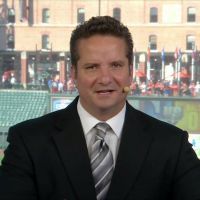
Johnny and Ray interview Sean Burnett about earning his first save after the Nats' 6-3 win
So Burnett got the call, and he delivered, pitching a 1-2-3 ninth for the Nationals' first win of the year. There's little about him that fits the typical closer's mold; he throws in the low 90s, is left-handed and doesn't strike out many batters. But the Nationals love his demeanor on the mound, and they've repeatedly said they'd prefer the 23-year-old Storen to grow into the closer's role.
And it's tough to argue with Burnett's results so far; he converted three of four save opportunities last year, fashioning a 1.90 ERA in save situations. And in the four career saves he's converted (counting last year's and yesterday's), he's allowed one hit.
"For a soft-tossing lefty, it's pretty cool to pitch the ninth in a big league game," Burnett said. "From all I've been through over the years with injuries and being a starter, it's pretty cool to throw the ninth inning in a big league game and be that guy they called upon to do it. It's a neat experience. I was like a little kid out there today. It was something I'll always remember."
If this is the direction the Nationals plan to go, it's still a little unclear what it means for the rest of the bullpen. They used Storen as a setup man on Saturday, and Tyler Clippard, who had that role for most of last year, entered the game in the sixth, somehow slipping a handful of down-the-middle 92-mph fastballs past hitters. He got six swings and misses in 1 2/3 innings, the same number John Lannan got in five innings, and kept the Nationals ahead after the Braves started to rally in the sixth.
It's worth noting that Clippard entered the game with men on base; he struggled mightily at times in that situation last year.
"As many wins as I got last year (a team-leading 12), a lot of those wins were due to the fact I wasn't able to (hold leads)," Clippard said. "In my role, I don't want wins. I want holds. That's what we do in the bullpen; starters win games, and we hold the leads for those guys."
Clippard said part of his struggle with inherited runners last year was because he was still new to the bullpen; it was his first full year in the majors there after being a starter most of his career. "It's not going to be like this all year," he said. "There will be times when the runs come across, but I'm trying to limit that, for sure. We'll see how it goes. So far, so good."
And so far, it looks like the Nationals might have a late inning progression of Clippard to Storen to Burnett. We'll see in time how firm that is, and how long it lasts.