








Who could hit leadoff in Baltimore?
-

-

February 25, 2026 8:00 am
-

23 Comments
-

Gone are the days of the traditional leadoff hitter… Mostly.
For a majority of baseball’s lifespan, the archetype of a leadoff man was largely the same: high on-base players with great speed that put the ball in play. Their objective was to see pitches and set the table for the team’s best hitter, who typically sat in the third or fourth spot in the order.
Think of players like Mike Deveraux, who was routinely towards the top of the team’s leaderboard in stolen bases. In the 2010’s, Nick Markakis didn’t bring the speed, but he rarely struck out and reached base with consistency. Despite a few exceptions, the leadoff hitter was typically not the team’s best, but they checked certain boxes.
That ideology has largely shifted in the last 10 years.
In general, lineup construction can be generalized into the idea that teams want to get their best players the most at-bats possible. The list of players with the most plate appearances from the leadoff spot last year includes the names Shohei Ohtani, Fernando Tatis Jr. and Francisco Lindor, who combined to hit 102 home runs.
The high on-base leadoff hitter hasn’t been abandoned, though. Teams typically place their best hitter second or third in the lineup, while their leadoff man ranks at least in the top-three in both on-base-percentage and OPS. That’s where the two most frequent leadoff hitters in the game in 2025, Steven Kwan and TJ Freidl, found themselves.
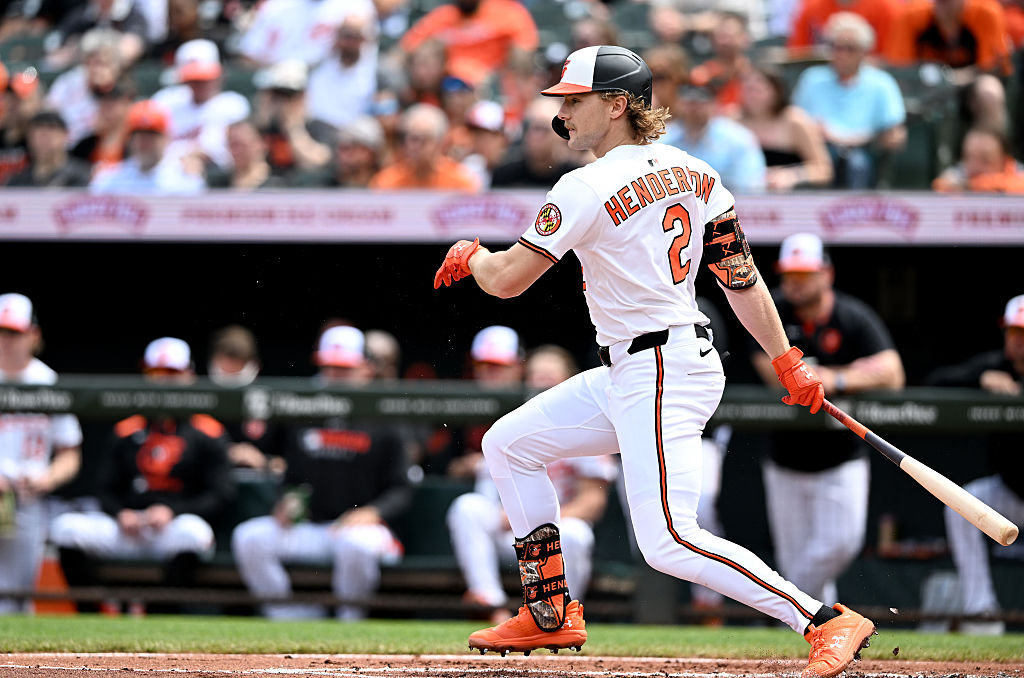
Among returning Orioles with at least 50 games played in 2025, you may have guessed which three players rank at the top of OBP and OPS rankings: Gunnar Henderson, Jordan Westburg and Jackson Holliday. Westburg and Holliday aren’t options to begin the year.
So who is the team’s leadoff hitter?
Process of elimination in that logic would lead you to Henderson, who did spend a majority of his time as the team’s leadoff hitter in 2024, a season in which he finished fourth in AL MVP voting with an .893 OPS, 37 home runs and 9.1 bWAR. Last season, though, the star shortstop mostly hit third.
If new manager Craig Albernaz takes lessons on lineup construction from his days in Cleveland, perhaps Henderson will stay in that No. 3 spot. That’s where you’ll find José Ramírez more often than not, whose combination of speed and power mirrors Henderson’s. The Orioles will also likely try to protect their shortstop with a powerful right-hander behind him, like Taylor Ward or Pete Alonso. Alonso, in particular, has spent most of his time hitting third or fourth, which would put Henderson second or third.
Ward is also a strong option for the leadoff role. Despite mashing 36 home runs, the outfielder did get nearly 100 plate appearances in the first spot of the lineup card in 2025. In fact, that’s where Ward has the most plate appearances in his long career.
While the veteran doesn’t bring blazing speed or a high batting average, Ward’s consistently high walk rate makes him a good candidate for the job. The power numbers don’t hurt, either. Seven leadoff hitters with at least 300 plate appearances in that spot in 2025 hit at least 20 home runs, and most of that group were on competitive teams.
That high on-base percentage train of thought could lead you to Dylan Beavers, whose .375 OBP led all Orioles with at least two games played. The question there, of course, is whether the young outfielder is ready for such a big role.
Adley Rutschman has been a high on-base hitter for a majority of his career, but will need a bounceback in 2026 to warrant a big move up the lineup card.
At this point, the best bet is likely Henderson or Ward. Both provide power, get on base at a high clip, and are likely among the team’s three best hitters. It’s possible that no matter who takes the leadoff spot, one could follow the other, with Alonso in the mix in the top three, too.
If the lineup were healthy, perhaps Westburg and Holliday would be the best candidates. For now, though, Baltimore has plenty of fallback options.
23 Comments
Related Articles
Looking at Orioles through eyes of some opposing scouts
The multi-tasking isn’t as intense for teams out of the playoffs. One less endeavor to fill the bandwidth.…
Read More
Taking another look at the outfield
The Orioles and every other team in baseball are on the lockout clock, with the possibility of baseball…
Read More
This, that, the other and more
Make this make sense. The Orioles drew 586 walks this season, the second most in the American League…
Read More