







Checking with Robertson on upcoming draft, and tossing out a few names
-

-

July 02, 2026 4:00 am
-

1076 Comments
-

Some of the Orioles’ behind-the-scenes business involves the construction of a draft board, with the first round beginning July 11.
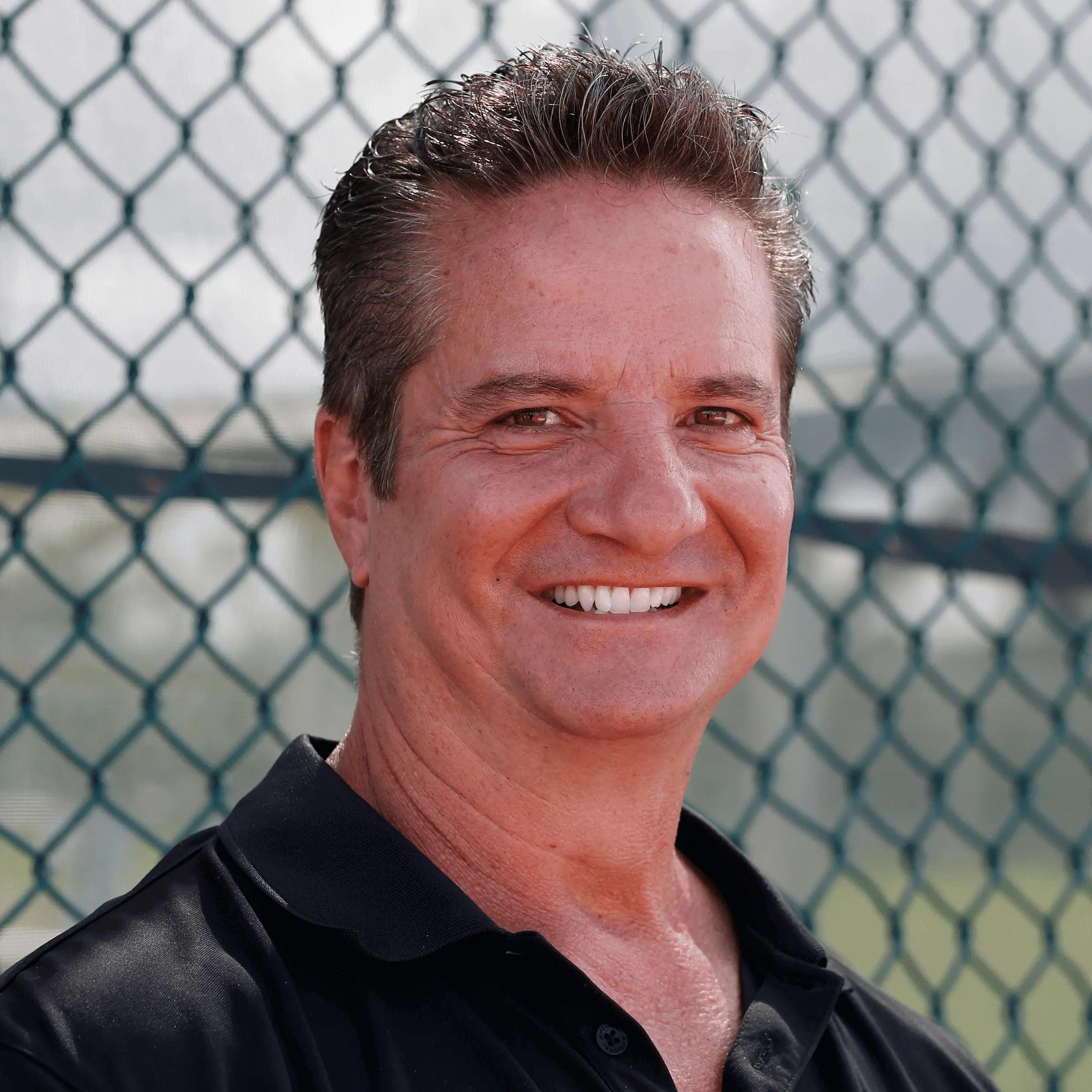
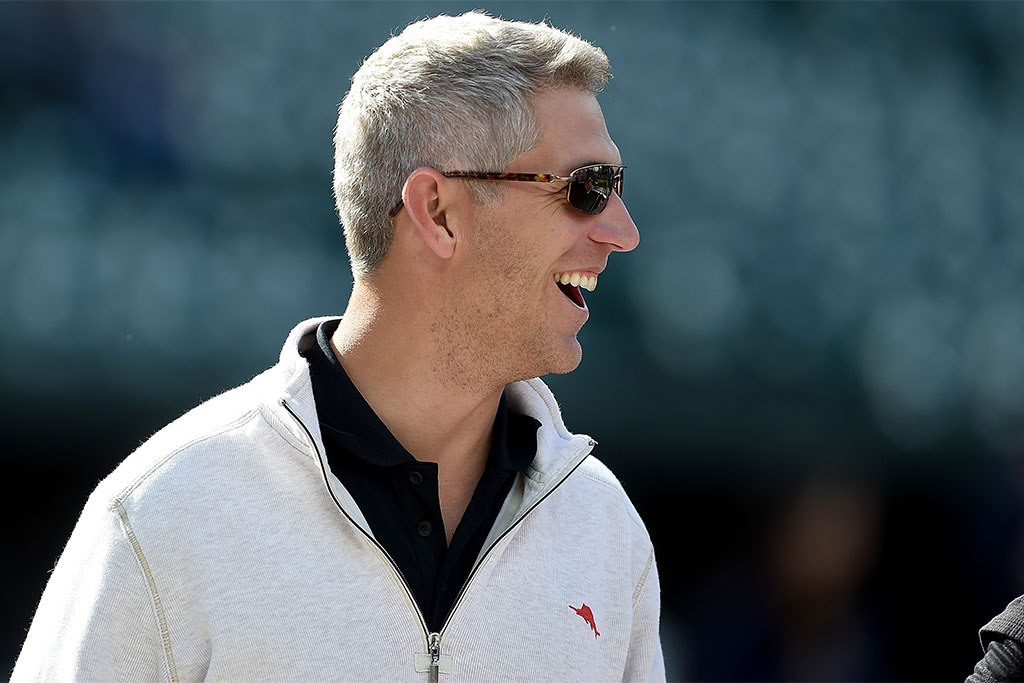
Will Robertson, in his first year as vice president of domestic scouting, smiled yesterday when asked in his media scrum outside the home clubhouse whether he’d share it.
Robertson looks young, but he wasn’t born yesterday.
“No, not today,” he quipped.
The Orioles likely will stick to their preference for taking the best available player rather than focus on needs. It lined up perfectly in 2019 when the system was starved for a franchise catcher, they had the first overall selection, and they used it on Adley Rutschman, though the debate still rages whether they should have taken shortstop Bobby Witt Jr.
Most draft “experts” assume that he Orioles again will pass on a pitcher in the first round, but this might be the first time since Mike Elias moved into the front office that there’s a least a hint of a possibility that the club will break from recent tradition.
There’s some buzz surrounding UC Santa Barbara right-hander Jackson Flora if he falls to them. The Pirates at No. 5 and Royals at No. 6 are candidates to select him. There’s a better chance that left-hander Gio Rojas of Stoneman Douglas in Parkland, Fla. is available when the Orioles take their turn.
Rojas who turned 19 earlier this week, posted a 0.58 ERA with 124 strikeouts in 72 as a senior. He’s 6 foot 4, his fastball touches 98 mph, and as someone in the organization told me, he’s “projectable.”
“He doesn’t fit their model,” he said, “but he’s gonna be good.”
Flora, college baseball’s Pitcher of the Year, posted a 1.06 ERA and 0.853 WHIP in 16 starts this season, and he struck out a school-record 133 batters in 102 innings. He surrendered only three home runs, and he crafted a 38 1/3 inning scoreless streak.
The more likely outcome, it appears, is that the Orioles choose an outfielder. MLB Pipeline and ESPN are among the outlets projecting Georgia Tech’s Drew Burress if he’s on the board. However, Baseball America, The Athletic, FanSided and CBS Sports have the Orioles selecting Eric Booth Jr. of Oak Grove High School in Mississippi.
Sports Illustrated projects LSU outfielder Derek Curiel.
If there’s a knock on Burress, it’s his size. He’s listed at 5 foot 9 and 185 pounds. But he hit 25, 19 and 16 homers over his three seasons in college, along with 15, 23 and 22 doubles. He totaled 189 RBIs and slashed .357/.484/.720 in 179 games.
MLB Pipeline’s Jonathan Mayo wrote: “The Orioles like their bats and tend to like the college ones when picking in the first round. Burress, unlike some of the other ones that they’ve drafted, does not have holes in his swing. Maybe he’s not as explosive, but I think there’s a better certainty that he’s going to hit.”
Baseball America ranks Booth, who turns 18 on Saturday, as the top outfielder in the draft. He’s 6 foot, 205 pounds with 80-grade speed, and just go back a few years to the Enrique Bradfield Jr. selection to understand how enamored the Orioles can become with it. Booth ran the fastest 60-yard dash at 6.33 seconds at last year’s East Coast Pro showcase.
Booth can play center field and is a plus defender. And he batted .481 (37-for-77) with a .669 on-base percentage and .922 slugging percentage as a senior. Lots of tools here.
Among the other players who have received mention as possible fits are Georgia Tech catcher Vahn Lackey, Alabama shortstop Justin Lebron and Kentucky shortstop Tyler Bell. Lackey probably will be gone before the seventh pick. MLB Pipeline, for example, has him second.
“I think that there’s an argument for a lot of different demographic classes,” Robertson said when asked about strengths and weaknesses in this year’s early draft rounds. “I think that the high school pitching class would be a relative strength to past years, and that’s reflected by the industry. But there’s definitely interesting players across all demographics – college bats, high school bats. There’s a lot of depth I think in all demographics, from our first pick and even into some of the other big investment picks, as well.”
Everyone seems in agreement that UCLA shortstop Roch Cholowsky is going first to the White Sox, who are trying to leap from three consecutive 100-loss seasons to a division title in 2026.
(A member of the front office walked past me Tuesday and asked, “Hey, what’s it like to be a few weeks away from no longer being the most famous Roch in baseball?” Let’s face it, we all knew this day was coming.)
The seventh pick comes with a slot value of $7,327,200. The Orioles have $13,114,000 in their bonus pool.
The Orioles selected catchers Ike Irish and Caden Bodine at 19th and 30th overall in last year’s draft, leading some people to speculate on Rutschman’s future in the organization. Irish isn’t catching anymore and Bodine was packaged to the Rays in the Shane Baz deal.
Keep your jump to conclusions mat rolled up.
After Rutschman in ’19, Elias used his first pick on Arkansas outfielder Heston Kjerstad in the truncated 2020 draft, Sam Houston State outfielder Colton Cowser in ’21, Stillwater (Okla.) High shortstop Jackson Holliday in ’22, Vanderbilt outfielder Bradfield in ’23, and North Carolina outfielder Vance Honeycutt in ’24.
The Orioles are hoping for success similar to the last time they chose seventh – Young Harris (Ga.) College outfielder Nick Markakis in 2003. And not two years earlier with Cumberland University left-hander Chris Smith.
This isn’t an exact science.
“Other than the No. 1 pick, you’re still subject to what the team or teams do in front of you,” Robertson said. “Our player pool is still pretty wide and that’s the nature of this class, but also you want to be very thorough. You don’t want to close doors too early, no matter where you’re picking. So I don’t think that the seventh pick in particular would differ. We’ve picked later. We hope to continue to pick later in future years. And you have to be prepared for all kinds of scenarios.”
The Orioles lean heavily on college position players since Elias’ arrival, but Robertson indicated that they aren’t married to the idea. There are other roads that lead to a successful draft.
Teams can hit big without sticking to one philosophy.
“I think that there are good prospects, good major leaguers that come from a variety of different backgrounds and a variety of different skill sets,” Robertson said.
The last pitcher chosen in the first round was Grayson Rodriguez in 2018, after DL Hall in ’17 and Cody Sedlock in ’16. But the Orioles took Michigan State left-hander Joseph Dzierwa in Round 2 last summer and he’s headed to the All-Star Futures Game. Georgia right-hander JT Quinn followed 11 picks later.
Asked how open the Orioles are to selected a pitcher early again, Robertson replied, “I wouldn’t classify myself as particularly different than our organizational philosophy, but I will say that there has always been openness to pitching early. We’ll see how the bard shakes out this year, but I promise that we are discussing pitchers at all levels of investment and certainly have done the work to feel prepared take a pitcher or position player earlier than the small sample of drafts that this administration has had.”
Robertson estimated that he’s scouted between 100-150 prospects.
“I got out a lot this year and saw players in person,” he said, “as did a number of members of our staff.”
He didn’t share that list, either.
1076 Comments
Related Articles
Six Orioles prospects ranked in top 100 per MLB Pipeline
Entering the 2023 season, the Baltimore Orioles had one of the most stacked farm systems in baseball. The…
Read More
Taking another look at third base
Ever since the Orioles left New York without playing their final game, a soaked tarp providing a wrap…
Read More
This, that and the other
Whatever additional changes are coming to the Orioles’ front office, and they already parted with player development executive…
Read More