








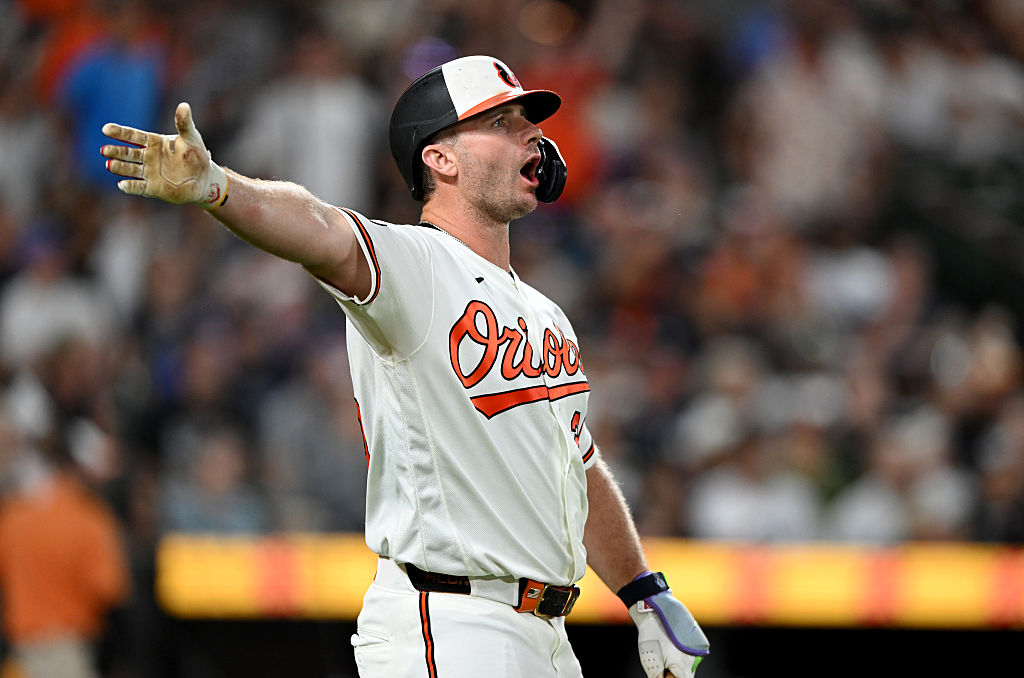
Following up on controversial Alonso fly ball and a non-home run
-

-

August 20, 2026 4:00 am
-

2 Comments
-

Major League Baseball has a review problem that everyone seems to agree can be fixed.
Pete Alonso’s fly ball down the left field line last night appeared to land inside the pole and give the Orioles a 4-3 lead over the Yankees in the bottom of the seventh inning.
Alonso and the home dugout were in celebration mode until being told it was foul. No time was wasted in calling for a challenge. Manager Craig Albernaz moved up the steps and cupped his ears, the universal sign for umpires to stop play, with such force that he could have drawn blood.
Some time passed, Orioles fans cheered the video replays, and the proverbial rug was pulled from underneath them. The call stood. The score remained tied. And Alonso, who hit his 29th homer in the third inning, responded by striking out.
The Yankees scored twice in the top of the eighth on a walk, two hit batters, and infield hit and a wild pitch. There’s rubbing salt in a wound and there’s gently sprinkling it.
“You definitely never know what they’re going to rule, but I was really surprised that it came back stands,” Albernaz said.
“The first thing is, on the dugout iPads there’s ball tracking data with the field that the players see, so it’s really tough to have that come back as stands and have that visual in the dugout, as well. It’s 2026. I think technology is advanced pretty good. There are teams using AI on the iPads and other sports use ball tracking data for challengeable calls. Don’t understand why we don’t do it, but it’s not why we lost the game. But I think that moment was a big moment, especially it takes a home run from us and Pete, as well.”
The dugout view made the Orioles confident in the eventual ruling. They were stunned by the outcome.
“I had a pretty good look at it,” Albernaz said. “It’s tough for the umpire down the third base line, the way he’s looking and going over the foul pole, but I think when it goes to review and look at all the angles and video and especially the ball tracking data, yeah, pretty disappointing.”
Alonso never took his eyes off the ball – from the time it left reliever Brent Headrick’s left hand to the descent into the seats. He hopped up the line, still holding onto the bat, then chucked it in celebration.
“Looking at the video,” Alonso said, “the view from where the camera was pointing straight down the line, from what it looked like, I mean, it was to the right of the yellow and the pole, so I thought it was fair.”
If only there was a way to eliminate the guesswork.
Oh, wait …
“We have Hawk-Eye,” Alonso said, referring to an advanced computer vision system that’s used in sports to track and predict the exact flight path and bounce of a ball in real time.
“I think a simple fix is like football, you have the pylon camera with the plane, where it shoots right across the goal line. And I feel like, for us, we could easily have a laser or a camera that shoots straight up. For me, I’m not the only one. It happens all the time to a bunch of guys throughout the course of the year. It happens a lot during the season.
“Obviously, this is a big game in-division, so obviously this one’s going to be a little bit more amplified. But this happens quite a few times throughout the season, more than you would think. I think having a camera or laser shooting straight up, we have all the technology, analytics and whatever and funds. I don’t see why we can’t do it.”
Alonso shared one reason that’s he’s heard – because every ballpark has different shapes and dimensions. Each one is unique.
“So that’s my understanding of it,” he said.
It doesn’t make him feel any better.
“Obviously, it sucks for us. It sucks, yeah. It sucks. But it is what it is,” Alonso said.
“The umpire made the call on the field and the review room stood with that call, and that’s what we have to live with and move on. And we have to as a team, and individually, bear down and respond to adversity.”
The Yankees wouldn’t let them, scoring twice in the eighth, stranding two runners in the bottom half and getting a 29th save from closer David Bednar after he retired the side in order.
“It’s frustrating, for sure. But again, unfortunately, that’s baseball,” Alonso said. “At the time, they had the momentum and they capitalize on it. They did a great job of executing when momentum shifted their way, and kudos to them, hat’s off to them.
“They’re obviously a great opponent. And for us, we need to do a better job of kind of bearing down and digging our heels in in those situations.”
Starter Chris Bassitt, who retired 10 of his last 11 batters, dug in his heels when asked about the controversy.
“Obviously I think it was fair, but yeah, after the call, it’s just crazy that we still have this issue,” he said. “I think we might be the only major sport with an issue like this. It’s been years that we have technology that can easily use to say this is exactly the right thing or wrong thing, and the fact that we don’t have it in 2026 is crazy. That’s my take.
“It’s not so much that they got the right call or the wrong call or whatever. I think if you’re going to ask the general public and get a 50/50 answer or something like that. But it’s just the fact that we don’t have the technology in place to actually say, ‘Hey, this was fair or foul,’ is literally crazy in 2026. It’s crazy.”
Bassitt doesn’t sound optimistic that baseball will fix the glitch.
“Because it would cost money,” he said when asked why a better system isn’t in place. “That’s it. I mean, that’s literally it. You ask every fan of this game, that’s a true fan, every single fan would want those cameras. If you ask every single player, they would want those cameras. If you ask every coach, they want the cameras. It costs money. That’s it. That’s literally it.”
2 Comments
Related Articles

This, that, the other and more
Make this make sense. The Orioles drew 586 walks this season, the second most in the American League…
Read More
Dipping in for another dozen mailbag questions
The Orioles stayed out of the news for another day. Releasing right-hander Juan Duran from the Dominican Summer…
Read More
Taking another look at the bullpen
The hints that 2026 wasn’t going to be much better than 2025 arrived super early to the Orioles.…
Read More