








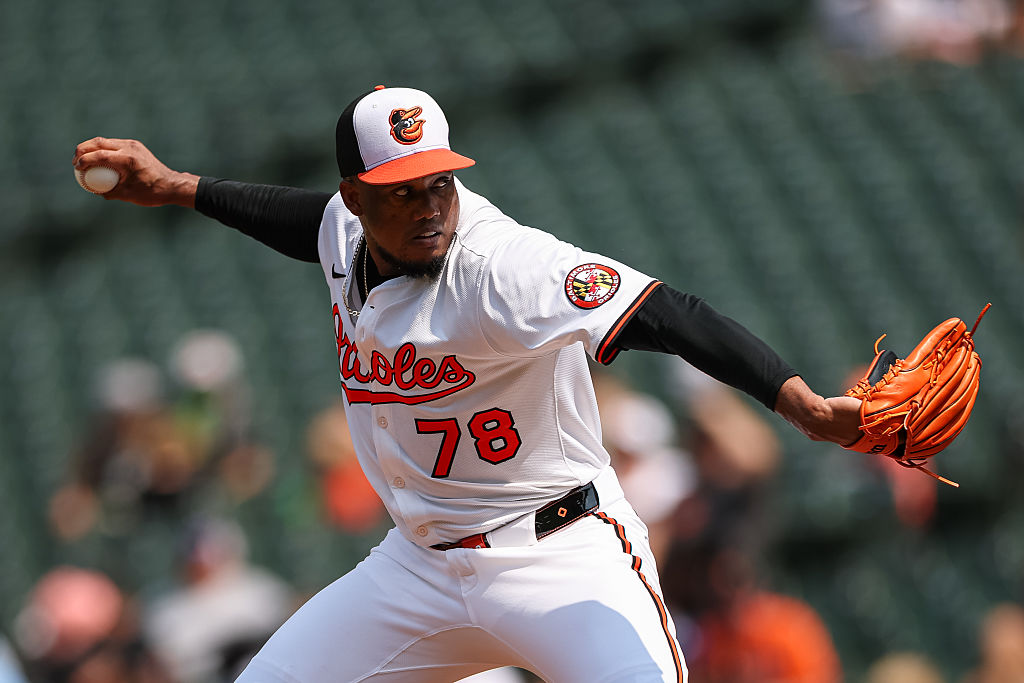
Looking at the importance of some Orioles impressing in camp
-

-

January 30, 2026 4:00 am
-

0 Comments
-

Spring training results don’t count and don’t really matter unless you have a serious gambling addiction. Seek help immediately if you’re checking the line on an Orioles game in Lakeland.
Much more important is getting through camp healthy, and for some players, a level of production that keeps them under consideration for the Opening Day roster or perhaps an early call-up.
Stats don’t matter until they do.
Past managers swore that they didn’t check the numbers. We’ll find out later if Craig Albernaz makes the same claim. But it isn’t hard to identify some of the Orioles who need to get loud while stating their cases.
Not everyone has the luxury of using camp to get ready for the season.
We’ve seen examples in the past where ranking among Grapefruit League leaders didn’t tip the scales, but worse is playing your way off the Ed Smith Stadium grounds and to the minor league complex in Twin Lakes Park. Or raising more doubts in the minds of team officials who are hoping for a bounce-back season but can’t bank on it.
Yennier Cano
He’s one of the more intriguing Orioles because the 2023 All-Star should be on much more solid ground, but he’s been in decline the past two seasons. His ERA has gone from 2.11 in 72 appearances to 3.15 in 70 to 5.12 in 65. His WHIP has grown from 1.005 to 1.300 to 1.483.
The Orioles optioned Cano for a brief period last summer, and they can do it again this year. He probably reports to camp with job in hand but must hold onto it, especially if president of baseball operations/general manager Mike Elias isn’t done with the bullpen.
Cano allowed one run and three hits in six innings in six exhibition games last spring, and similar success should get him to Baltimore on Opening Day.
He allowed three runs and six hits, walked three batters and hit one in 4 2/3 innings in five appearances in 2024. Maybe it wouldn’t matter now, but can he afford to take that risk?
Heston Kjerstad
I don’t know whether a monster spring would get Kjerstad on the roster. There just isn’t room unless Elias creates it. Taylor Ward, Tyler O’Neill and Dylan Beavers are ahead of him in the corners, and Colton Cowser projects as the starting center fielder who also provides coverage in left and right.
Leody Taveras is a switch-hitter who’s the backup in center but also capable of playing anywhere. And he’s being paid $2 million.
Kjerstad needs to use the six weeks or however long he’s in camp to prove that he’s 100 percent physically after last summer’s shutdown, and ease any lingering concerns about his development and ability to become an established major leaguer.
The Orioles made Kjerstad the second-overall pick in the 2020 draft. He turns 27 next month. It’s time.
Albert Suárez
The Orioles non-tendered Suárez in November after a pair of injuries limited him to only five appearances. It went downhill fast after his March 28 appearance in Toronto, which kept him away from a major league mound until Sept. 2.
Rather than move on from Suárez, the Orioles worked out a minor league deal on Dec. 17 that included a spring training invite.
Elias made it clear after the non-tender that the door remained open.
“We very much are fans of Albert, and we’re very much hoping to continue talking to him and made that clear to him and his group,” Elias said. “And I hope the feeling’s mutual.”
It was, but a minor league contract removes any complications with a pitcher who’s out of options. Suárez could be valuable in a swingman role. The Orioles will want to see the 2024 version of him.
Jeremiah Jackson
I’ll keep it short.
The roster might not have room for a utility infielder, but that isn’t Jackson’s concern. He’s got to hit and prove that he can be trusted at multiple positions.
A positive impression was made at the plate last summer, but the outfield appears to have five players locked in and the infield has six. Maybe a trade opens a spot. If so, Jackson has to demonstrate why he’s the right guy.
Kade Strowd/Rico Garcia
I’m lumping them together because they’re paddling the same boat.
The bullpen isn’t set and there should be competitions for the last spots. Relievers can pitch their way to Norfolk.
Strowd became the first pitcher drafted by Elias to make his debut, and he posted a 1.71 ERA in 25 games. He surrendered only one home run in 26 1/3 innings, but he also walked 13 batters.
Used 11 times in September, Strowd allowed two earned runs and struck out 15 over 9 1/3 innings. He allowed one run in 9 1/3 innings in August.
Strowd’s 1.71 ERA is the eighth lowest by an Oriole through his first 25 career relief appearances, but a poor camp probably puts him back in Triple-A.
Garcia signed a split contract that pays $900,000 if he’s in the majors. He allowed six runs and 21 hits in 19 innings, with six walks and 20 strikeouts, after the Orioles claimed him on waivers from the Mets in August.
His season might be remembered for how he held opponents hitless in 10 at-bats with the bases loaded and joined Chris Tillman (2014), George Sherrill (2008) and Ken Holtzman (1976) as the only pitchers in franchise history to escape bases-loaded, no-out jams twice in the same year.
Now, what can he do for an encore?
0 Comments
Related Articles
A look at tonight’s road series opener against the Pirates and some early Orioles observations
PITTSBURGH – The next step into the Orioles’ 2026 season has planted them in Pittsburgh again for the…
Read More
MASN+ commonly asked questions
It’s been a month since we launched our new and improved website and app experiences. In that short…
Read More
Orioles to celebrate 410 Day at Oriole Park with free public transportation, drink specials and postgame fireworks
Club invites fans to April 10 game with tickets starting at $19 and Friday Birdland Student Pass tickets available for $10 The Baltimore Orioles will bring fans from “The Stoop…
Read More