








Singleton can appreciate Ward’s walks
-

-

May 09, 2026 4:00 am
-

675 Comments
-

This time, it took a fourth plate appearance for Taylor Ward to be himself. Or the 2026 version of it.
Ward was called out on strikes in the first and third innings on a combined 11 pitches Thursday night in Miami, and he grounded out in the fifth. And then, the inevitable happened. Ward drew a leadoff walk in the eighth and scored on Pete Alonso’s game-tying single.
The 35th walk of the season left Ward one behind leaders Mike Trout and Nick Kurtz. He went 0-for-4 last night, running the count full in the third and whiffing on a cutter and in the fifth before bouncing out, and remains 40 behind his career-high set last year in 157 games with the Angels.
Ward had drawn a walk in 14 of his last 15 games, accumulating 22, before last night. He totaled six walks and seven runs scored against the Marlins, making him the only Orioles player to reach those marks in a three-game series.
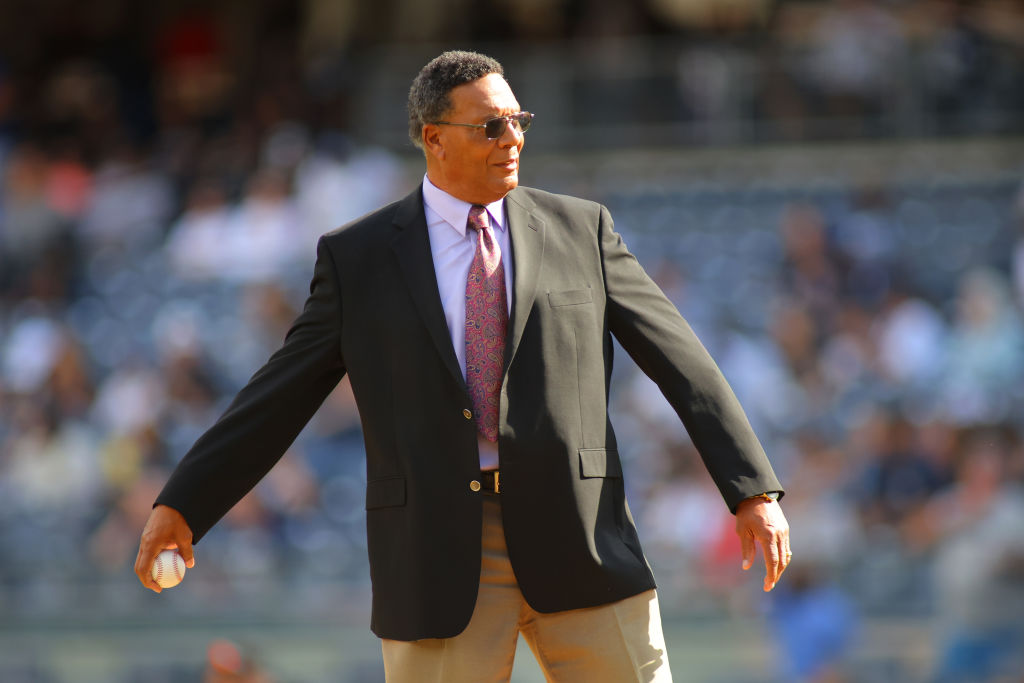
The Orioles’ record for most walks in a season belongs to Ken Singleton with 118 in 1975, his first year in the club after one of its best trades, with starter Mike Torrez also arriving from Montreal for Dave McNally, Rich Coggins and minor leaguer Bill Kirkpatrick.
Singleton hit in seven different spots in the order but mostly leadoff, doing it in 104 games. And it wasn’t his expected role.
Hall of Fame manager Earl Weaver appreciated Singleton’s power – it produced 35 home runs in 1979 – but the on-base skills could be put to better use. Singleton led the majors with a .425 OBP in ’73, and he batted .300/.415/.454 in ’75.
“When I came to spring training, Earl Weaver told me, ‘You’re gonna lead off this year,’” Singleton said earlier this week. “I said, ‘Earl, I’ve never really done that. I don’t steal bases.’ I think I stole only three bases that year. But he said, ‘It’s not about that. It’s about getting men on base. You’ll bat first. Bobby Grich walks a lot, he’ll bat second.’ Grich walked 107 times that year. So Earl wanted men on base in front of the big guys.
“Ironically enough, we opened up in Detroit. It was freezing. And I led off, four-pitch walk. Go to first base, go to third on a single by Tommy Davis, and Lee May’s first at-bat in the American League, he hits a home run in the upper deck in left field and we’re up 3-0. So I score the first run of the season. I walk back in the dugout, and Earl puts his finger in my chest and says, ‘That’s what the hell I’m talking about. Just get on base.’”
Singleton knew how to take orders. He did it 295 times, also a team record, in a league-leading 714 plate appearances, and he reached base 285 times in 1977.
“I always felt that if you can get on base as close to 300 times as possible, you’re helping the team out, no matter what you’re doing otherwise,” Singleton said. “I just tried to do what Earl told me to do. Get on base. That was it.
“I had no clue about what it took to be a leadoff hitter. In Montreal I batted third, fourth and fifth most of the time. But Earl had guys who could hit third, fourth and fifth. The team had kind of changed over the years and I fell out of the leadoff role and started hitting third, and then I started hitting more home runs. It was like a chameleon. Whatever he wanted me to do, I think I could do it.”
Ward belted 36 home runs last season but has only one with the Orioles. His average had risen from .228 to .278 and his OBP from .317 to .429 before last night, tied for third in the majors.
Singleton took the same pride in a simple walk.
“I had a good eye, and before ABS, of course, you gain a reputation with the umpires,” Singleton said. “I wasn’t up there swinging at everything. Mike Flanagan used to say, ‘You know, we could save a lot of time when Singy comes to the plate, just start the count at 3-2.’ I ran deep counts and I made the pitcher work. I wasn’t going up there swinging.
“(Rick) Dempsey said to me, ‘How come you take these close pitches and they don’t call them strikes?’ I said, ‘No. 1, cause I don’t swing at everything like you do. And the umpires, you get a little bit of a reputation. You might get the close call, especially if you don’t (vent) at them when it’s a called strike and you didn’t think it was.’ So I had a good reputation with the umps, and maybe I got a few breaks.”
Singleton played 15 years in the majors, winning a championship in his penultimate season in 1983, and finished with a .388 OBP. He’s fourth on the Orioles all-time walks list with 886.
The tools probably would be appreciated more in today’s game, though the analytical eye might shut when presented with his .328 average in 1977 and RBI totals of 103, 111 and 104 in three seasons.
“I led the (majors) in on-base percentage in 1973 and it wasn’t even a negotiating point,” he said. “My agent didn’t bring it up and the team didn’t bring it up, either. It didn’t really matter, the fact that I got on base 43 percent of the time that year.
“My feeling when I went to the plate was, if a pitch was too hard to reach and actually hit, it was probably a ball. And the whole idea is to get ahead in counts so you get better pitches to hit. I came to spring training one year and Earl says to me, and this was after I was established as the No. 3 hitter, ‘I’m gonna bat the kid fourth this year.’ He’s talking about Eddie (Murray). And he says, ‘Your job’s not gonna change. You can hit a home run or get on base so he can hit one.’ That’s what I did.”
Singleton walked 1,263 times in his career and struck out 1,246. Ward is at 35/31 this season. The counts run deep, as they did with Singleton. The plate appearances are managed professionally.
“In this day and age, some of these games, it’s terrible. They’re not hitting. It’s not hitting anymore,” Singleton said.
“Everybody seems to have one swing, and it’s going for it. You’ve got to be able to hit the ball the other way. That’s one reason why I stopped broadcasting. It’s just exit velocity, how hard the pitcher’s throwing, the spin rate. I didn’t need anybody to tell me that Nolan Ryan was throwing harder than anybody else. I could tell just by being up there.”
Singleton could recognize the obvious, but Weaver had a gift. He just saw the game differently.
“We were playing the Angels one night and Nolan Ryan’s pitching, and he had about 13-14 strikeouts and he’s shutting us out 3-0 in the eighth inning,” Singleton recalled. “But on that particular night, Earl put Pat Kelly in the lineup because he could hit Nolan Ryan, and he had (Mark) Belanger batting second because he couldn’t hit anybody else but Nolan Ryan. I was sitting next to Earl, and all of a sudden Nolan walks two guys and somebody made an error and the bases are loaded and Pat Kelly’s up.
“I said to Earl, ‘You know, he’s throwing like 200 miles-an-hour,’ and Earl looked at me and said, ‘We’ve got him right where we want him,’ and Kelly hit the next pitch for a grand slam. And Earl looked at me and winked and we won 4-3. So he knew who could do what against whom.
“Maybe Earl was a little ahead of his time.”
675 Comments
Related Articles
What’s next for Orioles after yesterday’s Wild Card elimination
A whack job of a baseball season couldn’t suddenly present itself as normal by the weekend. This isn’t…
Read More
Orioles select contract of Albert Suárez, option Trey Gibson
The Orioles have made the following roster moves: -Selected the contract of RHP Albert Suárez from Triple-A Norfolk. He will…
Read More
White Sox win officially eliminates Orioles from Wild Card chase (roster move)
The last ray of hope was blocked this afternoon. The Orioles can’t fiddle with the math while their…
Read More