








Which metrics have correlated to offensive success to begin 2026?
-

-

May 20, 2026 8:00 am
-

227 Comments
-

The best offenses in baseball have come in all shapes and sizes in 2026.
The Braves and Dodgers have done just about everything well. The Yankees have slugged their way to production, the Guardians and Brewers are seeing lots of pitches without chasing, and the Rays are, well, the Rays.
With so much discourse about what the O’s have or have not been doing well offensively, let’s take a deep dive into what metrics have correlated most closely with run production to begin 2026. To do so most effectively, we’d likely need to find the R-squared for each offensive metric in the game to find its exact correlation. Plus, there are tons of ways to impact offensive production that can’t be properly measured, such as precise batted ball locations in the field, opposing defensive adjustments, moving runners over, etc.
Baseball is a game of many numbers, but they still can’t properly tell the full story.
So, for this exercise, we’ll consider the top-12 teams in runs scored and their metrics, as of Tuesday night’s games: the Nationals, Braves, Dodgers, Yankees, Cubs, Pirates, Brewers, Twins, Rays, Guardians, Astros and Marlins.
To start, there are the basic measuring tools. Eight of the top-12 run scoring teams were also in the top-12 in hits and batting average, seven were in the top-12 in walks and slugging percentage, and ten were in the top-12 in on-base percentage. But how are these high marks being achieved?
Thus far, the answer seems to be overall plate discipline. The Guardians, tenth in baseball in scoring entering last night’s games, had also seen the most pitches per plate appearance in the game. The Brewers, seventh in runs, had the lowest chase rate, and the Rays, ninth, had the second-fewest strikeouts. At least seven of the top-12 teams in each of these plate discipline categories were also in the top-12 in scoring.
Baltimore, notably, ranks well in both chase rate and pitches per plate appearance at sixth and fourth, respectively. Thank you, Taylor Ward.
Before getting into batted ball metrics, it’s important to make a distinction about exit velocity: hitting the ball hard is always a good thing. Of course, different situations can call for different approaches and tactics, and if a team’s hunt for barrels comes at the cost of chase, swing-and-miss and strikeouts, it can be detrimental. But, in a vacuum, hitting the ball hard is good.
Entering last night’s games, there had been 481 batted balls with a 100 mph exit velocity, according to Statcast. Those balls had a batting average of .404. At 98 mph, that average was still at .318, and at the hard hit distinction of 95 mph, the average was .261. Once you’re down to just 90 mph, the batting average dips to .195.
Average exit velocity is still a flawed statistic, though, and can’t be used completely independently. While there’s a big difference in batting average results for a ball hit at 95 mph and 90 mph, there is virtually no difference between 90 mph and 65 mph. What teams are hunting for are barrels, a combination of the ideal exit velocity and launch angle.
Thus far, however, just four teams in the top-12 in barrel rate are also in the top-12 in scoring. That metric did correlate much more closely with run production in a full season’s sample in 2025, though.
While overall batted balls have reigned supreme over hard-hit rate thus far, nothing is a perfect science. The Giants have scored the fewest runs in baseball despite having the fourth-most batted balls and ninth-most hits.
Interestingly, Baltimore aligns closely in their offensive story with their AL East rival: New York. The two teams are the best in the league when it comes to hard hit rate and exit velocity, were just three points apart in batting average entering Tuesday, see lots of pitches and rarely expand the zone. But the Yankees were tied for the fourth-most runs in baseball while the O’s were 14th.
So, what’s making the difference? Based on the numbers, despite being very close metrically, the Bombers walk more and find more barrels. Since the O’s are just below the Yankees in average exit velocity, that must mean that New York has found more success combining those exit velos with launch angles. Though the teams are aligned in many places, a few key areas can make a big difference.
Of course, offense is just part of the game. Correlating an offensive metric to overall record is an oversimplification, minimizing the impact of pitching, defense and baserunning, all areas where the O’s are searching for improvement.
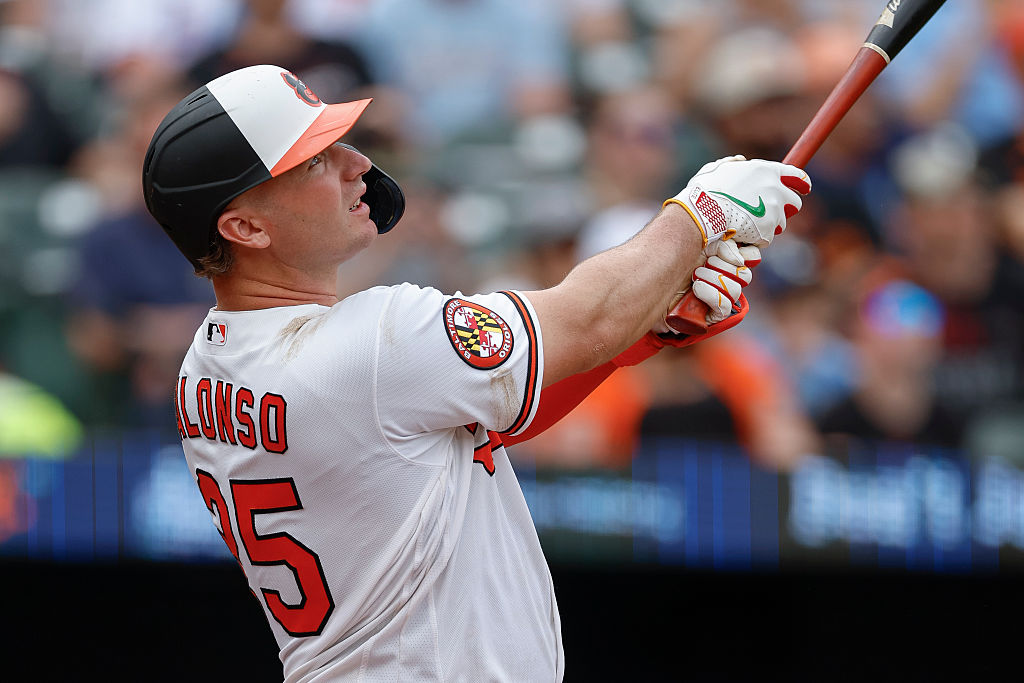
Offensively, though, Baltimore doesn’t appear to be far away, especially if they can get more production from stars like Gunnar Henderson and Pete Alonso. It all adds up to part of a complicated puzzle that the O’s will need to piece together sooner rather than later.
227 Comments
Related Articles
Looking at Orioles through eyes of some opposing scouts
The multi-tasking isn’t as intense for teams out of the playoffs. One less endeavor to fill the bandwidth.…
Read More
Taking another look at the outfield
The Orioles and every other team in baseball are on the lockout clock, with the possibility of baseball…
Read More
This, that, the other and more
Make this make sense. The Orioles drew 586 walks this season, the second most in the American League…
Read More