








Orioles Day 2 draft results
-

-

July 12, 2026 8:07 pm
-

0 Comments
-

The 2026 draft class for the Orioles contains 11 pitchers, four outfielders, three shortstops, one catcher and one utility player.
Eight of the 20 came out of high school. One player is named “Gunnar.”
Rounds five through 20 were held today.
Here’s a summary of those picks.
Fifth round: Jimmy Anderson, shortstop, Heartland Community College in Illinois
The Orioles also selected Anderson in the 19th round last year. He’s slashed .465/.544/1.030 in 111 college games. He also had 40 doubles, seven triples, 36 home runs, 151 RBIs, 68 walks, 30 strikeouts and 32 steals in 35 attempts. Anderson is from Joliet, Illinois, also the hometown of Orioles No. 1 prospect Nate George.
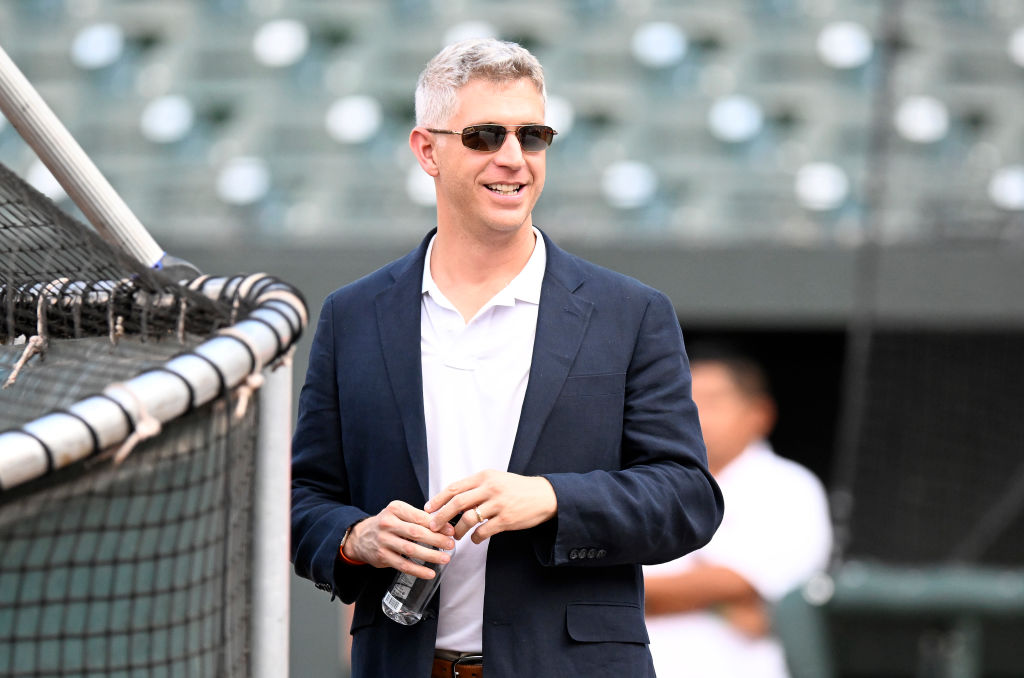
“We stayed on it the whole time, stayed very close to the player and the situation and got even more confident in the talent evaluation,” said vice president of domestic scouting Will Robertson. “When it became clear he was at the top of the board, we worked something out.”
Sixth round: Zane Adams, left-hander, Alabama
Adams, 22, is listed at 6 feet 4. He posted a 5.09 ERA and 1.481 WHIP in 48 games over his three seasons with the Tide. Adams made 17 starts this season and registered a 4.58 ERA in 90 1/3 innings, and he had a career-best 25.2 percent strikeout rate and career-low 7.6 percent walk rate. He has a four-pitch mix, including a fastball that’s 92-93 mph and can touch 96, and a plus-changeup that produced a 54 percent whiff rate this spring.
“He’s been a really productive three-year starter in the SEC, a 6-foot-4 lefty up to 96 with a swing-and-miss changeup,” Robertson said. “Just with kind of the size and left-handedness and durability track record that usually isn’t available where we got him. So we were thrilled that one landed our way.”
Seventh round: Ryan Piech, RHP, Xavier
Piech, 20, is a Cleveland native who made 14 starts this season and posted a 3.18 ERA and 1.140 WHIP with 98 strikeouts and only six home runs allowed in 76 1/3 innings. He had a 4.53 ERA and 1.458 WHIP the previous year in 14 starts spanning 59 2/3 innings. He averaged 10.8 strikeouts per nine innings at Xavier. Baseball America says Piech sits 91-93 mph with plus-ride on his fastball, and he’s got a mid-80s slider/cutter hybrid. He ranked 209th on the publication’s Top 300.
Eighth round: Will Plunkett, shortstop, Mamaroneck (New York) High School
MLB Pipeline ranked Plunkett, 18, at 198th in the draft. He’s committed to Binghamton University. Scouts like his line-drive oriented, smooth swing. MLB Pipeline writes: “It’s easy to project plenty more raw power to come because his frame should be able to add plenty of strength as he matures. He’ll show it off in batting practice at times, but there’s not that much impact in games to date. Plunkett’s athleticism also helps him defensively. He looks like he could stick at shortstop for a while, with enough arm and more to come, good actions and solid instincts. He might look like a collection of 50 grades, but that’s a solid big leaguer, and there could be a lot more in the tank.”
Ninth round: Collin McKinney, RHP, Arizona
The 6 foot 5 McKinney spent 2024 at Baylor as a red-shirt freshman and had a 6.70 ERA and 1.752 WHIP in 14 starts. He struck out 60 in 49 2/3 innings. McKinney had a 3.98 ERA in 15 games (13 starts) the following year with the Wildcats, and a 6.27 ERA this year in 17 games (six starts). He averaged 5.6 walks and 10.8 strikeouts per nine innings in college. His fastball sits in the mid-90s and he also throws a sharp slider in the high 80s.
10th round: Carlos Sanchez, utility, LSU Shreveport
Sanchez is a native of Venezuela who transferred from Florida Southwestern State College and batted .388 with 12 home runs, 82 RBIs and 37 stolen bases. He tied the school’s single-season record of 13 triples. His honors included RRAC Player of the Year, First Team All-RRAC, RRAC Golden Glove and ABCA/Rawlings NAIA First Team All-America. Sanchez played catcher, second base and the outfield this summer in the MLB Draft League and hit .308 with a .984 OPS.
11th round: Ross Norman, RHP, Coastal Carolina
Norman is imposing at 6 feet 7. He spent two years at Georgia State before transferring to Coastal Carolina, where he registered a 6.46 ERA and 1.474 WHIP in 16 starts and tossed a complete-game shutout against James Madison. Perfect Game ranked him among the top 500 prospects in the nation in high school.
The rest of the picks include the following:
12th round: Leo Marrero, catcher, Hardee (Fla.) High School
Marrero is a left-handed hitter and the first primary catcher taken by the Orioles in this draft. Baseball America and Perfect Game rated him among Florida’s top 100 high school draft prospects. The Orioles would need to prevent him from enrolling at South Florida, where he’s committed..
13th round: Garrison Sumner, RHP, BYU
The Red Sox drafted Sumner in the 20th round in 2025. He pitched at Utah in 2023, making five relief appearances, and Salt Lake junior college in 2024. He had a 6.78 ERA and 1.538 WHIP in 15 games (10 starts) with BYU, but he also struck out 85 in 66 1/3 innings.
14th round: Miguel Hugas, RHP, Mercer University
South Carolina plucked Hugas from the transfer portal, but the Orioles selected him with the 410th pick. The Venezuela native posted a 6.17 ERA in 16 games (15 starts). He also hit 21 batters in 77 1/3 innings and struck out only 52. He pitched in the Valley League in 2025 and Cape Cod League in 2026.
15th round: Braden Smith, RHP, Central Florida
Smith started out at Maryville University of St. Louis, spent two years there and transferred. He had a 3.52 ERA in 12 starts in 2025 before switching schools. Smith made eight starts with Central Florida as its Friday night starter and had a 6.21 ERA in 33 1/3 innings. He missed the last two months of this season after he was hit in the face by a line drive, resulting in facial fractures and a concussion. The fastball sits in the low 90s and he also has a sweeping slider, 12-6 curveball and changeup.
16th round: Brayden Fry, SS, Cranfield (New Jersey) High School
Fry, listed at 6 feet, was chosen First Team All‑State by Prep Baseball New Jersey and has committed to Saint Joseph’s. He posted a .475 average with 10 home runs and 29 stolen bases during his senior year.
17th round: Diego Gutierrez, RHP, University of San Diego
Guitierrez turned 23 years old in May. He pitched at Cal State Northridge for three seasons, his ERA climbing from 2.94 to 6.98 to 7.85. He made 14 starts this year and registered a 6.62 ERA with 84 strikeouts in 66 2/3 innings. More impressive were his nine appearances in the Appalachian League, where he allowed two earned runs, walked none and struck out 23 in 14 1/3 innings.
18th round: Gunnar Garrison, RHP, Eaton (Colo.) High School
Garrison, 18, has switched his committed from BYU to Arizona State. He’s got a low-90s fastball that climbed to 94 over the summer. He’s won two 3A state championships.
19th round: Victor Salazar, outfielder, Paetow (Texas) High School
Salazar batted .411 during his season year. He committed to Temple Community College in Texas.
20th round: Ross Davis, RHP, Rusk (Texas) High School
Davis is a big-strikeout guy whose fastball gets into the mid-90s. He signed to play at San Jacinto College in Houston.
Robertson wasn’t aware of the college/high school splits in selections. It wasn’t planned. It just unfolded that way.
“I was just trying to line them up and knock them down the past several hours,” he said in a video call.
“I think that the way we attacked it this year, we were looking for some opportunities that other teams weren’t on and our area scouts, our office staff, really attacked it hard and presented some opportunities to get interesting high upside talent and get them in the organization young and start their development at a younger stage.”
Asked about the early run on college pitchers, Robertson said, “We really flushed out the depth of college arms. We ran out of rounds and still had professional level talents.”
High college ERAs don’t scare off the team. Too many other factors are in play.
“ERA is definitely something we are aware of,” Robertson said. “I will point out that the run environment in college baseball and particularly some of the players we took today is different than the scale where we associate with major league or professional baseball levels. So that’s part of it. But there’s a whole host of things we look at, from the pitch velocity, movement profiles, from the release point. We’re definitely focused on what kind of prospect and eventual major leaguer they’ll be, rather than how effective they are today.
“Obviously, it gives you a good sense of comfort when they’re already preventing runs and getting through innings. We definitely do value that. But again, we’re trying to put the holistic picture together and value a lot of other things that we find to be predictive.”
The draft signing deadline is July 27 at 5 p.m.
0 Comments
Related Articles
This and that after Orioles’ 10-5 win in Texas
The Orioles matched their run total for the previous three games only eight batters into this afternoon’s series…
Read More
Orioles and Rangers lineups and notes before series finale in Texas
Don’t blame the starting pitching. Kyle Bradish held the Rangers to two unearned runs last night in six…
Read More
McDonald: “This is the strongest I’ve seen the minor league system from a pitching standpoint with the Orioles”
Shortly after the Orioles made the trade that rocked the baseball world, or at least shook it up…
Read More