

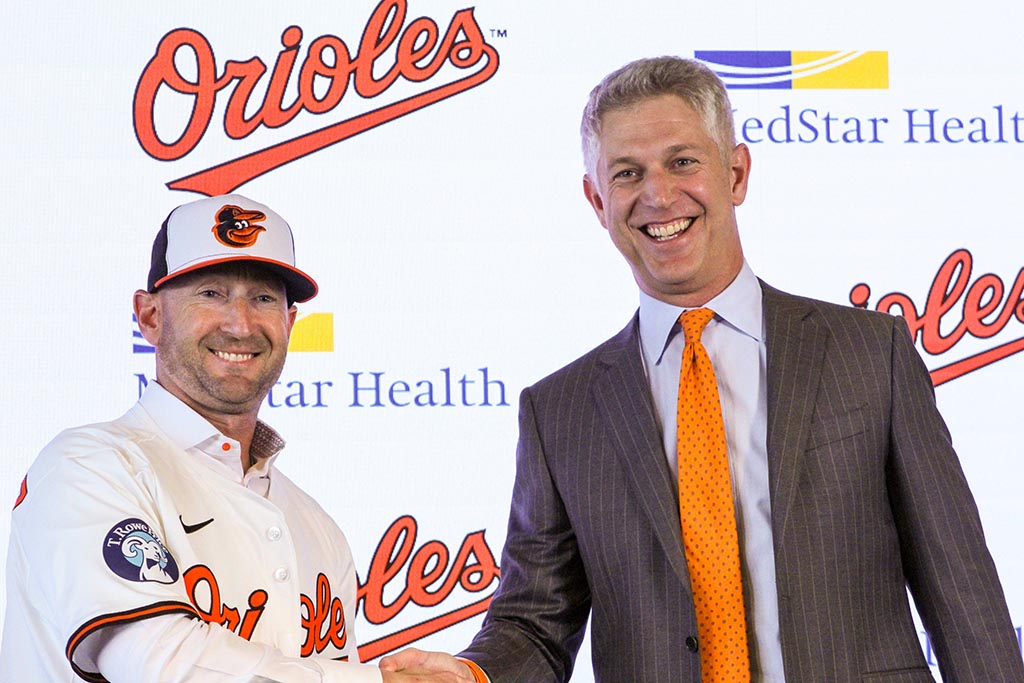
Butera "honored, humbled excited" to become Nationals manager

Blake Butera

Well before he even knew he would be a candidate for the Nationals’ managerial job, let alone get the job, Blake Butera tuned into Paul Toboni’s introductory press conference and found himself captivated by the franchise’s new president of baseball operations.

The 33-year-old with zero major league experience came to an immediate conclusion: “I can work alongside that guy.”

Turns out Toboni also had Butera in his sights, one of several names on a long list of managerial candidates he circled as ones to remember. And that feeling was only bolstered when he got a call out of the blue from Hall of Famer Mike Piazza, who employed Butera on his Team Italy coaching staff at the 2023 World Baseball Classic.

“I have no idea what you’re doing with your search,” Piazza told Toboni, “but there’s this guy that you’ve got to interview.”

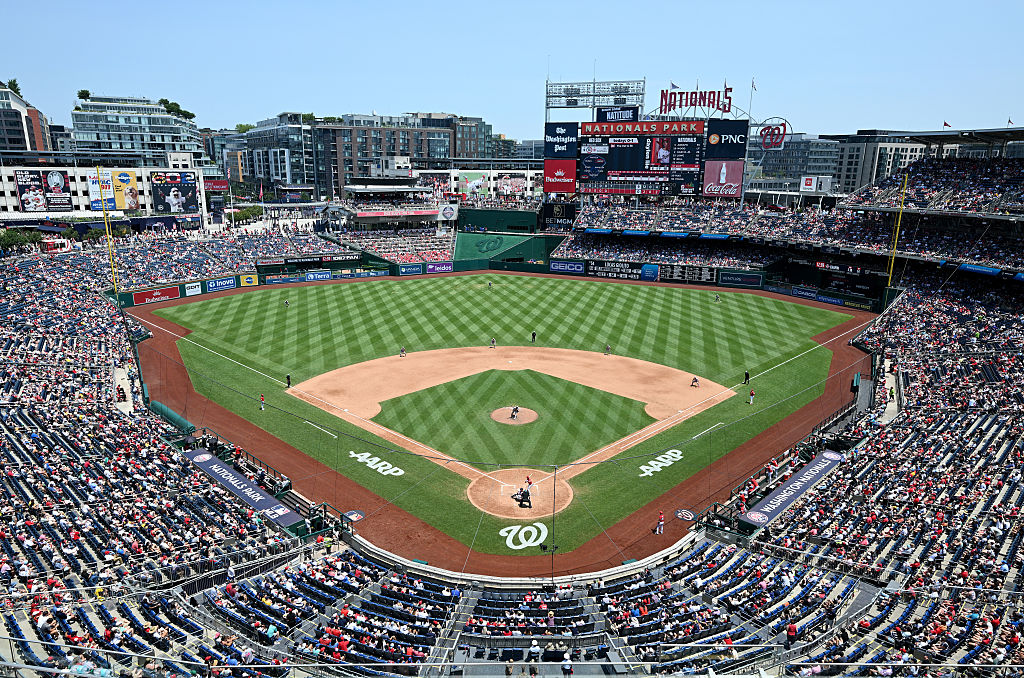
Six weeks later, these two previously unknown 30-somethings with an affinity for each other from afar, now sat behind the same dais at Nationals Park, a room packed with reporters, cameras, team executives and family members all watching as they officially began working together as the two people now in charge of this baseball club.

Plenty of questions coming for Butera in introductory press conference

Blake Butera

It's been 18 days since news first broke the Nationals were hiring Blake Butera as manager. And at long last, today we will finally get to hear from him about his vision for the job and the path that brought him here.

Butera will be formally introduced during a 1:30 p.m. press conference at Nationals Park – you can watch it live on MASN – with president of baseball operations Paul Toboni also scheduled to speak about the first major decision of his tenure here.

Why did it take 2 1/2 weeks from hiring to press conference? Because Oct. 30 was a big day in the Butera household for reasons that had nothing to do with baseball. On the same day he signed his contract with the Nats, Butera’s wife, Caroline Margolis, gave birth to the couple’s first child: Blair Margaux Butera.

With Butera’s immediate priorities focused on family in Raleigh, N.C., the Nationals decided to wait to hold the press conference until this week. Not that he hasn’t already been busy working out of the home office. Butera has hired three members of his coaching staff so far: bench coach Michael Johns, pitching coach Simon Mathews and catching coordinator Bobby Wilson (whose addition has not officially been announced yet but has been reported).

There should be plenty of opportunities for reporters to ask Butera (and Toboni) questions today. Here are some of the most interesting ones …

More important offseason dates coming up

Paul Toboni

We will finally hear from new Nationals manager Blake Butera tomorrow afternoon, with his introductory press conference at Nats Park scheduled for 1:30 p.m. It will air in its entirety on MASN, and be sure to check back on the site and on the MASN Nationals social channels for more coverage.

This has been the most highly anticipated day on the Nats’ offseason calendar since Butera was hired over two weeks ago, the delay in the presser being due to his wife giving birth to the couple’s first child on the day he accepted his first managing job in the major leagues.

Of course, there will be plenty to dissect from what Butera and new president of baseball operations Paul Toboni say tomorrow. But the new leadership duo will have to get straight to work because there are important offseason dates coming up …

* Tuesday, Nov. 18 – Qualifying offer acceptance deadline at 4 p.m.
Toboni and Butera will have all day Monday to celebrate the new skipper’s official introduction. But the very next day, they have to get down to work.

Though this deadline does not directly affect the Nationals, who did not extend the $22.025 million qualifying offer to any players, Toboni and Co. will know after this deadline passes which free agents will cost them a draft pick if they chose to pursue and sign any of them.

How Nats prospects fared in the Arizona Fall League

Seaver King

While the 2025 season ended long ago for most members of the Nationals organization, eight prospects did continue to take the field throughout October and into the first two weeks of November, participating in the Arizona Fall League.

The AFL is held annually, with prospects from all 30 clubs coming together to face each other over a six-week season and see how everyone performs against their counterparts. It’s often a stepping stone for players on the cusp of the majors, though you’ll also find a number of prospects who are still a few years away.

This fall’s crop of Nats prospects included a recent first-round pick in Seaver King, an even more recent second-round pick in Ethan Petry and an organizational top-10 prospect in Jake Bennett. They were joined on the Scottsdale Scorpions by outfielder Sam Peterson, right-handers Austin Amaral and Sean Paul Linan, plus lefties Pablo Aldonis and Jared Simpson.

King was the most notable and most successful of the group. The 2024 first-round pick from Wake Forest was a force at the plate, batting .359 with a .468 on-base percentage, .563 slugging percentage, eight extra-base hits, 24 RBIs, six stolen bases and a solid 11-to-15 walk-to-strikeout ratio in 18 games played. The versatile defender played exclusively at shortstop and committed only one error while totaling 101 innings in the field.

Petry was the only 2025 draftee to play in the AFL, the second-rounder from South Carolina showing off a good eye (13 walks in 75 plate appearances) but not showing off his noted power swing (one double, one homer). Playing primarily right field, he finished with a .228/.400/.298 slash line, holding his own considering he had only 24 games of professional experience at low Single-A Fredericksburg prior to this.

Where payroll stands as the Nats enter the offseason

Paul Toboni

In an offseason loaded with major questions, the Nationals have already answered two of the biggest ones: Who will lead baseball operations, and who will manage the big league club?

Among the high-ranking questions still to be answered: How much money will they spend compared to previous years?

That’s the kind of question that comes up every year, and it’s never really answered publicly in words by anyone. The answer only comes through actions, once you see what the team’s payroll is come Opening Day and once you learn what kinds of other investments have been made to strengthen the organization.

But it’s especially notable this winter because it’s widely believed Paul Toboni would not have taken the job as the team’s new president of baseball operations without some kind of understanding from ownership how much he would be allowed to spend.

Here’s what managing principal owner Mark Lerner said when asked that question Oct. 1 during Toboni’s introductory press conference:

Explaining my NL Cy Young Award ballot

Paul Skenes

We’re nearing the end of awards week for the Baseball Writers’ Association of America’s four highest honors that are handed out after every baseball season.

The third was announced last night as Paul Skenes was unanimously named the Cy Young Award winner in the National League. And it just so happens yours truly was among the 30 BBWAA members who submitted ballots to determine the league’s best pitcher for 2025.

My ballot was similar to those of the other 29 voters in that we all had the same top two selections. Skenes and the Phillies’ Cristopher Sánchez were the only pitchers named on every ballot, and this was the first time the winner received all the first-place votes and the runner-up all the second-place votes since the BBWAA went to a five-player ballot format for the Cy Young Award in 2010.

I was one of just four voters whose ballots had the Brewers’ Freddy Peralta in third place (he finished fourth), and I was one of 11 who had the Dodgers’ Yoshinobu Yamamoto fourth (he finished third). I was also one of seven who had the Padres’ Nick Pivetta fifth (he finished sixth).

But the award rightfully went to Skenes, who became the 13th pitcher to be unanimously elected the NL winner.

Nationals announce 2026 home game times

Nationals Park generic

Nationals open home schedule Friday, April 3, at 1:05 p.m. ET vs. Dodgers 

The Washington Nationals today announced first pitch times for the team’s 2026 regular-season home schedule, opening next year’s Nationals Park slate on Friday, April 3, at 1:05 p.m. against the two-time defending World Series champion Los Angeles Dodgers. Fans can guarantee access to Opening Day tickets by purchasing a 2026 Full, Half or Partial Season Package. Visit nats.com/Tickets for more information.

Fans can get an early look at the 2026 squad on Monday, March 23, as the Nationals host the Baltimore Orioles for an exhibition contest. The game is part of a multi-year agreement with the Beltway rivals, which places one game at Nationals Park and another at Oriole Park at Camden Yards each year through 2029. Following this year’s exhibition game in Washington, D.C., Nationals Philanthropies hosts its annual Homecoming Gala at The Anthem, featuring red carpet arrivals and special activities for fans.

For the 14th consecutive season, the Nationals will kickstart MLB’s slate of Fourth of July games, hosting the Pittsburgh Pirates for a 11:05 a.m. first pitch. A special showcase of the national pastime in our nation’s capital, the game will offer plenty of pageantry and patriotism leading into a slate of special events around the District in celebration of America’s 250th birthday.

Washington Nationals home start times will remain consistent with the previous two years, as evening games begin at 6:45 p.m.; Saturday afternoon games start at 4:05 p.m.; Sunday games at 1:35 p.m.; and most weekday afternoon games at 12:05 or 1:05 p.m.

Where the Nats roster most needs to be bolstered

Paul Toboni

Baseball’s annual GM Meetings wrap up this morning in Las Vegas, and as is always the case, there hasn’t been a whole lot of hard news coming out of the event. This isn’t the Winter Meetings (which are coming up Dec. 7-10 in Orlando), where the rumors fly fast and furious and we often get major news breaking at all hours of the day and night.

The process, though, begins at the GM Meetings, with executives starting to get a sense of what other teams are looking to do, who they might want to sign and who they might be willing to trade. And surely Paul Toboni has spent the last three days talking to as many people as possible as he prepares to embark on his first Hot Stove League as a major league president of baseball operations.

Toboni’s primary focus since taking the job in late-September has been overhauling the Nationals’ front office, then hiring a manager (Blake Butera, whose introductory press conference is now set for 1:30 p.m. Monday, by the way) and filling out his coaching staff. But the attention will shift to improving the roster soon enough, and there is no shortage of work that needs to be done in that regard.

Toboni inherits a roster that won only 66 games but lost only three veterans to free agency in Josh Bell, Paul DeJong and Derek Law (who was hurt the entire season). Pretty much all of the regulars return, but that doesn’t mean the 2026 Opening Day roster is anywhere close to set. The Nats are going to want to improve at a number of positions, and that can’t come solely from within the organization.

Though he hasn’t publicly stated his wish list yet, Toboni should be looking at three positions in particular that need upgrading no matter what: First base, starting pitching, relief pitching.

Nats lure 30-year-old Mathews from Reds to become pitching coach

Simon Mathews

The youngest major league manager in five decades is going to have a pitching coach even younger than him. One with a significant D.C. connection and a pedigree in modern baseball philosophy.

The Nationals have hired 30-year-old Simon Mathews as their new pitching coach, luring the up-and-comer from the Reds to work for 33-year-old manager Blake Butera.

Mathews, who first made a name for himself as one of the best pitchers in Georgetown history, spent this past season as Cincinnati’s assistant pitching coach, working underneath the highly regarded Derek Johnson. That’s his lone season on a major league staff, but that actually makes him more experienced than Butera, who has never played, coached nor managed above Single-A.

Mathews worked in the Reds organization for five seasons, the first four in the minors. He began in 2021 by implementing the club’s pitching program at its Dominican academy, then was rehab pitching coordinator in 2022. He served as assistant coordinator of rehabilitation and pitching initiatives from 2023-24, then earned his first promotion to the big leagues in 2025 as assistant pitching coach.

Cincinnati’s pitching staff has lowered its ERA and WHIP each of the last four seasons, from a 4.86 ERA that ranked 28th in the majors in 2022 to a 3.86 ERA that ranked 12th this year, and from a 1.389 WHIP that ranked 26th in 2022 to a 1.222 WHIP that ranked seventh this year. The Reds earned a wild card berth this season behind a pitching staff anchored by three homegrown starters in their 20s (Hunter Greene, Andrew Abbott, Nick Lodolo) who each finished with an ERA under 3.35 and a WHIP under 1.150.

Nationals name Simon Mathews pitching coach

Nationals Park generic

The Washington Nationals officially named Simon Mathews the team’s pitching coach on Tuesday. The announcement was made by Nationals President of Baseball Operations Paul Toboni and Manager Blake Butera.

Mathews, 30, joins the Nationals after five seasons with the Cincinnati Reds, most recently as their assistant pitching coach in 2025. He spent four seasons in Cincinnati’s Minor League system, serving as their assistant coordinator of rehabilitation and pitching initiatives (2023-24), rehab pitching coordinator (2022) and, in his first season in 2021, implemented the club’s pitching program at its academy in the Dominican Republic.

“Simon brings a tremendous amount of knowledge and a wide range of experience to our staff,” said Butera. “He is grounded, has great perspective on pitching and connects incredibly well with players at all levels. He is widely respected throughout the game and the type of coach that makes everyone around him better. Simon is a tireless worker and is uniquely equipped to help our pitchers reach their full potential.”

Mathews was the director of pitching at Push Performance in Tempe, Ariz. and an online trainer at Driveline Baseball prior to joining the Reds organization in 2021. In those roles, he designed throwing programs for pitchers, with an emphasis on improving movement patterns and velocity and promoted arm health.

Mathews signed with the Los Angeles Angels as a non-drafted free agent following the 2017 First-Year Player Draft and went on to pitch three seasons (2017-19) in their system. He appeared in 71 professional games, advancing as high as Triple-A Salt Lake in 2018 and 2019.

Butera hires former Rays colleague Johns as bench coach

Michael Johns

Blake Butera’s right-hand man in the dugout will be a familiar face to the Nationals’ new manager, not to mention one with more experience at the sport’s higher levels.

Butera has selected Michael Johns as his bench coach, the club officially announced Monday evening, tabbing his longtime Rays colleague to work alongside him in D.C.

Johns, 50, has worked in various capacities for the Rays since 2008, including nine seasons as a minor league manager, culminating with an 88-62 record and league finals appearance with Triple-A Durham in 2023. He spent the last two seasons as Tampa Bay’s first base coach, his lone experience in the major leagues.

A former infielder in the Rockies’ farm system in the late ’90s, Johns has since made a name for himself as an instructor for a franchise known for having one of the sport’s best player development pipelines. He served five seasons (2018-22) as Tampa Bay’s minor league field coordinator, tasked with establishing a consistent program for all the organization’s affiliates.

Johns and Butera overlapped nine seasons with the Rays, forming a connection that led to their current reunion with the Nationals. Butera, 33, is 17 years younger than his new bench coach and figures to lean heavily on Johns’ expertise both in establishing pregame routines and in-game decision-making.

When will Nats start appearing on award ballots again? (Lile finishes fifth for Rookie of Year)

Daylen Lile

Just to be clear from the outset: Daylen Lile will not be named National League Rookie of the Year tonight. We already know the 22-year-old outfielder didn’t finish among the top three vote getters. Either Braves catcher Drake Baldwin, Cubs right-hander Cade Horton or Brewers third baseman Caleb Durbin will receive the award when the results are announced this evening.

But Lile’s name will show up somewhere on the ballot below those three. He actually far outperformed both Baldwin and Durbin in batting average (.299), slugging percentage (.845) and triples (11).

The two reasons Lile didn’t at least finish in the top three: 1) He wasn’t in the majors as long as those other guys, with 95 fewer plate appearances than Baldwin and 155 fewer than Durbin, and 2) His poor defensive play left him trailing everyone else in WAR by a healthy margin.

In the end, it’s a shame Lile didn’t spend more time with the Nationals than he did, because who knows how much more he could’ve produced at the plate with, say, 451 big league plate appearances than 351. We do know nobody in the league was better down the stretch, because Lile won not only NL Rookie of the Month for September but NL Player of the Month as well.

The fact Lile will even appear on the ballot tonight is noteworthy on its own. Because it’s been a while since anybody in a Nationals uniform accomplished that.

Nationals name Michael Johns bench coach

Nationals hat and gear

The Washington Nationals officially named Michael Johns the team’s bench coach on Monday. The announcement was made by Nationals President of Baseball Operations Paul Toboni and Manager Blake Butera.

Johns, 50, brings nearly 20 years of coaching experience to Washington’s staff, most recently as the first base coach for the Tampa Bay Rays the last two seasons (2024-25). Prior to that role, he managed Triple-A Durham in 2023, leading the club to an 88-62 record and an appearance in the International League Championship Series.

“Michael shares the same values that are important to me and to our organization,” said Butera. “He’s humble, has an incredible work ethic, and his preparation and attention to detail are unmatched. He played a major role in building Tampa Bay’s player development system and brings valuable recent Major League experience. More than anything, I know he’ll do everything he can to help our players, staff and organization succeed.”

Johns was Tampa Bay’s Minor League field coordinator for five seasons (2018-22), having moved to that position after managing Single-A Charlotte (2015-17), where he led the club to its only Florida State League championship in 2015. Prior to that, Johns managed Single-A Bowling Green (2014), Single-A Hudson Valley (2013) and Rookie-level Princeton (2010-12). He joined the coaching ranks in 2008, spending two seasons on Hudson Valley’s coaching staff.

Prior to joining the Tampa Bay Rays, Johns was the head coach at Orange Park (Fla.) High School from 2004-07 and prior to that, was an assistant coach at Fernandina Beach (Fla.) High School.

Butera receives support from close friend Albernaz in Baltimore

Blake Butera

Baseball – a game that spans generations around the globe – is a vast world. And yet, sometimes we discover hidden connections that make it seem oh so tiny.

Much like that Disneyland theme ride says: It’s a small world after all.

When the Nationals announced Blake Butera as their eighth manager last week, very few people (if any) in local circles knew much about the 33-year-old former senior director of player development with the Rays.

In fact, even the guy who hired him, new Nationals president of baseball operations Paul Toboni, had only heard about Butera without ever meeting him prior to the interview process, though he did scout Butera as a draft prospect coming out of Boston College in 2015.

“We didn't know each other personally,” Toboni explained Tuesday during a Zoom call with reporters to discuss his first major hire. “I heard a lot about him, actually, even though I'm not much older than him (35), I scouted him when he was at Boston College. We just have a lot of mutual connections where I'm actually surprised that I had never met him prior to this process kicking off. So many mutual connections. I can't remember exactly the first time I really heard about him, but there had been a number of people over the years that had told me about Blake. I really went into this process having an understanding of what I thought it was going to be like, but didn't honestly know until I really hopped into it. I'm really fortunate that we did reach out to interview him because he blew me away throughout the process.”

Nats have plenty of holes to fill on minor league rosters as well

Joan Adon

We noted earlier this week how the Nationals have cleared a bunch of spots on their 40-man roster, losing several players to other clubs via waiver claims while outrighting several more to Triple-A Rochester, some of those players electing to become free agents in the process.

All of those moves leave the team with only 34 current players on the 40-man roster heading into the offseason, which means new president of baseball operations Paul Toboni has a lot of work to do to assemble his 2026 major league roster.

Toboni and his staff also have a lot of work to do to assemble their minor league rosters, which have already seen a host of slots open up following the recent departures of players.

A whopping 32 minor leaguers officially became free agents Friday, the date when all minor league players with enough professional service time have the right to leave their organizations. The Nationals aren’t the only club to experience a significant exodus, but that number is pretty staggering nonetheless.

Most of the names aren’t recognizable to anyone but the most hardcore of prospect hounds, but there are several notable ones sprinkled in there who played this season at Triple-A: Joan Adon, Juan Yepez, Nick Schnell, Jackson Cluff, C.J. Stubbs and Chase Solesky.

Friday morning Nats Q&A

Paul Toboni

Good morning to everyone out there in NatsTown. Hope you aren't suffering too much from baseball withdrawal after one of the best postseasons, start to finish, in recent years and an absolutely fantastic World Series we'll be talking about forever.

It's time for the offseason now, and boy is there a lot for the Nationals to do. They've already made two of the most important hirings in club history: Paul Toboni as president of baseball operations and Blake Butera as manager. There's no way of knowing yet how either man is going to do in the short or long term, but it's safe to say the organization is entering a completely new era.

Let's take some time this morning to address what has already happened and what may still happen before pitchers and catchers report to West Palm Beach. As always, please submit your questions in the comments section below, then I'll do my best to answer as many of them as possible over the course of the morning. (Fair warning: There are probably going to be some questions I honestly don't have answers for at this point, but I'll try my best.) ...

Nats lose Brzykcy, Loutos on waivers, outright Lipscomb to Triple-A

Zach Brzykcy

The Nationals continued to remake their 40-man roster this afternoon with a series of transactions that included the departures of pitchers Zach Brzykcy and Ryan Loutos, the demotion of infielder Trey Lipscomb and the official activation of Josiah Gray, DJ Herz, Drew Millas and Trevor Williams off the injured list.

Both Brzykcy and Loutos were claimed off outright waivers, Brzykcy by the Marlins and Loutos by the Mariners. Lipscomb, meanwhile, cleared waivers and was outrighted to Triple-A Rochester, coming off the 40-man roster in the process.

The transactions were the latest in a string of moves by new president of baseball operations Paul Toboni and his front office to reset the Nats’ 40-man roster heading into the offseason. They’ve managed to clear a good amount of space for future additions, with six openings now available for their use, and the potential for even more in the coming weeks.

Brzykcy briefly looked like an organizational success story, an undrafted reliever out of Virginia Tech who had the potential to become a high-leverage arm in the big leagues. But the 26-year-old was beset by injuries, and once healthy couldn’t sustain any success in the majors. In 32 games over the last two seasons, he went 0-1 with a 10.05 ERA and 1.814 WHIP, striking out an impressive 9.4 batters per nine innings but doomed by a high walk rate (4.7 per nine innings) and home run rate (2.3 per nine innings). He'll now get a shot to realize his potential in Miami.

Loutos, 26, was a midseason acquisition by former general manager Mike Rizzo, claimed off waivers from the Dodgers. The right-hander struggled in 10 appearances, going 1-0 with a 12.00 ERA and 2.444 WHIP, with the same number of walks as strikeouts (six) and three homers surrendered in only nine innings. Originally with the Cardinals, he’ll try to resurrect his career in Seattle.

Nationals announce roster moves

Nationals hat and gear

The Nationals have announced the following roster moves:

-Trey Lipscomb cleared outright waivers, and he has been assigned outright to Triple-A Rochester.

-The Seattle Mariners claimed Ryan Loutos off of outright waivers.

-Reinstated Josiah Gray, DJ Herz, Drew Millas, and Trevor Williams from the 60-Day Injured List.

-The Miami Marlins claimed Zach Brzykcy off of outright waivers.

How much influence will Nats' new front office have on manager's office?

Paul Toboni

For generations, the division between a franchise’s front office and the manager’s office was clear-cut. The general manager’s job was to assemble the team’s roster. And the manager’s job was to use that roster as he saw fit.

That’s the way the Nationals operated under Mike Rizzo, who always insisted he let his managers make out their own lineup cards and decide on their own when to pull a starting pitcher and who to use out of the bullpen. That doesn’t mean Rizzo didn’t have opinions. Strong ones. Nearly every night during his 17-year tenure, he went into the manager’s office postgame and discussed all aspects of the just-completed game, often raising his voice about any decisions he didn’t exactly agree with.

But Rizzo never ordered his managers to fill out a lineup card a certain way. When Davey Martinez decided to move Kyle Schwarber into the leadoff spot, that was his own decision. When Dusty Baker decided to keep a slumping Jayson Werth in the 2-spot for Game 5 of the 2017 National League Division Series against the Cubs instead of starting Howie Kendrick in his place, that was his own decision. And when Matt Williams decided to pull Jordan Zimmermann in favor of Drew Storen with two outs in the ninth, a runner on first and the Nats leading the Giants 1-0 in Game 2 of the 2014 NLDS … well, that was solely his own decision.

That’s just the way it was always done. It’s not, however, necessarily the way it’s always done anymore.

Over the last decade-plus, more and more front offices have been dictating the usage of certain players to their managers. Smart executives well-versed in analytics create optimized lineups, mandates about starting pitchers only facing opposing hitters twice per game and specific situations that should fall upon specific relievers. And in some cases, these are some of the most successful teams in baseball: The Dodgers and Yankees, in particular, are among the organizations believed to operate this way.

More reflections on Albernaz's hiring as Orioles manager

Albernaz Elias

Craig Albernaz brought his three children on the honeymoon phase of his hiring as Orioles manager.

The family posed for photos this week on the Camden Yards field, with sons CJ and Norman and 2-year-old daughter Gigi wearing their nicest clothes and batting helmets.

“I’ve got an eagle right here,” Gigi said, pointing at the bird.

Albernaz gently corrected her.

“That’s an Oriole,” he said.